Posted on

Hedd Wyn – a True Welsh Talent

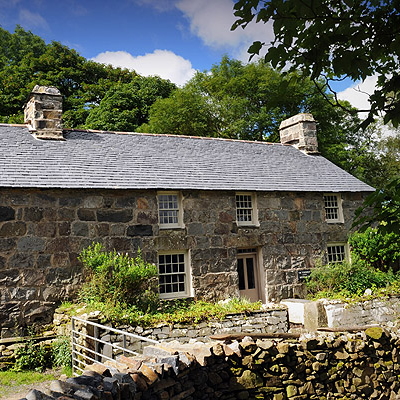
Yr Ysgwrn is a traditional Welsh farmhouse and Grade II* listed building, dating from the 1830s, which came to international recognition in 1917, as the home of the poet Ellis Humphrey Evans, better known by his bardic name, Hedd Wyn (‘Blessed Peace’).

Hedd Wyn was killed at the Battle of Pilkem Ridge on 31st July, 1917 and was posthumously awarded the 1917 National Eisteddfod Chair at Birkenhead, the highest accolade awarded to Welsh language poets. To the great sorrow of the audience at the chairing ceremony, it was announced that Hedd Wyn had indeed been killed in battle and in the absence of the rightful owner of the chair, it was draped in a black cloth and has been known ever since as ‘the black chair’, representing a generation of Welsh youth lost at the First World War.

Since 1917, Yr Ysgwrn has been kept in the Evans family, most recently by Hedd Wyn’s elderly nephew, Gerald Williams. Since Hedd Wyn’s death, the family have welcomed visitors to Yr Ysgwrn, observing a promise made to Hedd Wyn’s mother, “to keep the door open”, to visitors from across Wales, Britain and beyond, who are fascinated by Hedd Wyn’s story.

Yr Ysgwrn represents a period of Welsh social, cultural and agriculture and history during the early twentieth century. The life and literary contribution of Hedd Wyn also represents a generation of lost youth, who gave the ultimate sacrifice during the First World War. The legacy of Hedd Wyn is relevant to communities across Europe, but is particularly potent in Wales, as a high number of Welshmen were killed during the First World War.

On March 1st, 2012, Snowdonia National Park Authority and its partners announced that they had secured Yr Ysgwrn for the nation. The purchase was made possible thanks to funding from the Welsh Government and the National Heritage Memorial Fund.

Visits to Yr Ysgwrn are available by appointment only. Contact us to arrange a visit:
Tel: 01766 770 274
Email: yrysgwrn@eryri-npa.gov.uk
Posted on

The Purr Behind the Throne

The reign of Charles I was dominated by religious and political conflict including the English Civil War, but legend has it that the all powerful King was convinced one thing could protect him – his black cat!

This royal feline was much more than just a favourite pet. The monarch thought the cat brought him good luck. He was so sure his survival depended on the precious puss, the story goes that he put it under 24 hour guard.  When the cat died, his royal highness is said to have lamented: “Alas, my luck is gone!”  The very next day he was arrested by  Parliamentary troops and charged with High Treason tried, found guilty and beheaded. The only English monarch to die in this way.

Through the centuries some of the most famous royal and political leaders have chosen to share the corridors of power with a feline friend and many of the tales have been woven into our heritage.

The Downing Street resident cat is legendary and UK Prime Minister’s cats can be traced back to the time of Henry VIII in the early 1500s.  The current encumbent is Larry, a brown and white tabby, who took up residence as Chief Mouser in 2011.  He is one of 100,000 cats employed by the British government to keep down mice!

There are even cats with their own Facebook page including one descended from the days of famous World War II leader Winston Churchill.  His country manor was Chartwell and he is claimed to have said the bravest cat he knew was Nelson for chasing a huge dog out of the Admiralty – hence its name after Admiral Nelson.  Another favourite was a marmalade coloured tom cat called Jock who was so well loved that Churchill requested there should always be a cat that colour with four white paws and a white bib at Chartwell.  The latest Jock, Jock V, took up residence as a 19 week old kitten and has his own Facebook page!

Copyright: Linda Harrison, The Cat Magazine, Spring 2013

Posted on

President Lincoln and North Wales

The Oscar winning film starring Daniel Day Lewis as President Abraham Lincoln made the news in the 2013 Oscars with its star taking best actor Oscar, but did you know that President Lincoln has ancestry in North Wales?

In the tiny village of Ysbyty Ifan located in the stunningly beautiful Snowdonia National Park, lies a derelect cottage named Bryngwyn (this translates as White Hill from Welsh).  Abraham Lincoln’s great, great grandfather, called John Morris, lived in Bryngwyn.  John Morris’ daughter, Ellen, emigrated to the United States with a group of Quakers, leaving Wales, it is believed, sometime in the first half of the 17th Century.

Some believe she left because of the poor quality of life in North Wales and the promise of a better life in Pennsylvania.  While she was out there, she met Cadwaladr Evans and they married.  He also came from North Wales in a town called Bala – some 20 miles from Ysbyty Ifan, although it’s ironic that the couple had not known each other before they both emigrated to the USA.

They had a daughter called Sarah and she went on to marry John Hanks.  They had a daughter called Nancy, who became the mother of Abraham Lincoln.

Hopefully the success of the new “Lincoln” movie prompts a few of our cousins over the pond to come and visit the place of President Lincoln’s heritage, here in North Wales.

   Bryngwyn Cottage, North Wales
President Abraham Lincoln

Many thanks to the BBC for picking up this lovely story from my part of Wales and you can read more at:
http://www.bbc.co.uk/news/uk-wales-21548773

Posted on

From Weaving to Computers

Who would have thought that cloth weaving and the invention of the first computer would be linked but read on and you’ll find out how.

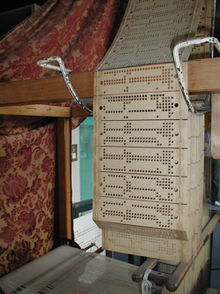
If you’ve ever bought quality curtains/drapes for your home or bedding then you may know the name Jacquard.  Monsieur Joseph Marie Jacquard was French as you’ve probably guessed and he came up with the idea of using printed cards to programme a loom to print cloth.  This so incensed the home workers of the day who thought this invention would cost them their jobs that they started to sabotage the new looms.  The word sabotage comes from the French sabot for wooden shoe or clog and they used their shoes to destroy the new machines.  Similarly in the UK the Luddites did the same in Lancashire and the Northern Mill towns.

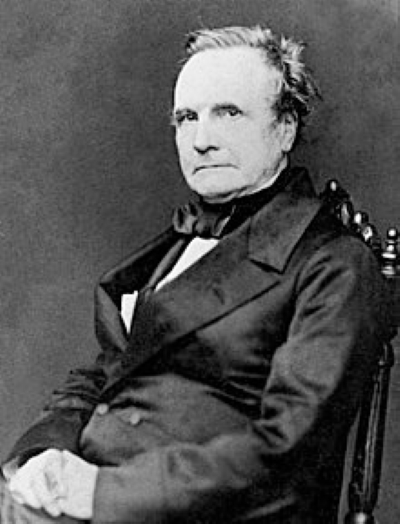
On to the computer link and it was those printed cards to programme the looms which lit a bulb in Charles Babbage’s brain being the mathmatician he was to think how similar programmed cards could do mathmatical equations – hence the first mechanical computer.  This was built from his design and is now housed at the Science Museum in London and it works too!

Thanks to the wonderful Stephen Fry and BBC’s QI programme for the above.  It’s not Welsh but jolly fascinating.

Charles Babbage (Wikipedia)
Punch cards used in a Jacquard Loom
Posted on

Thomas Telford – Colossus of Roads

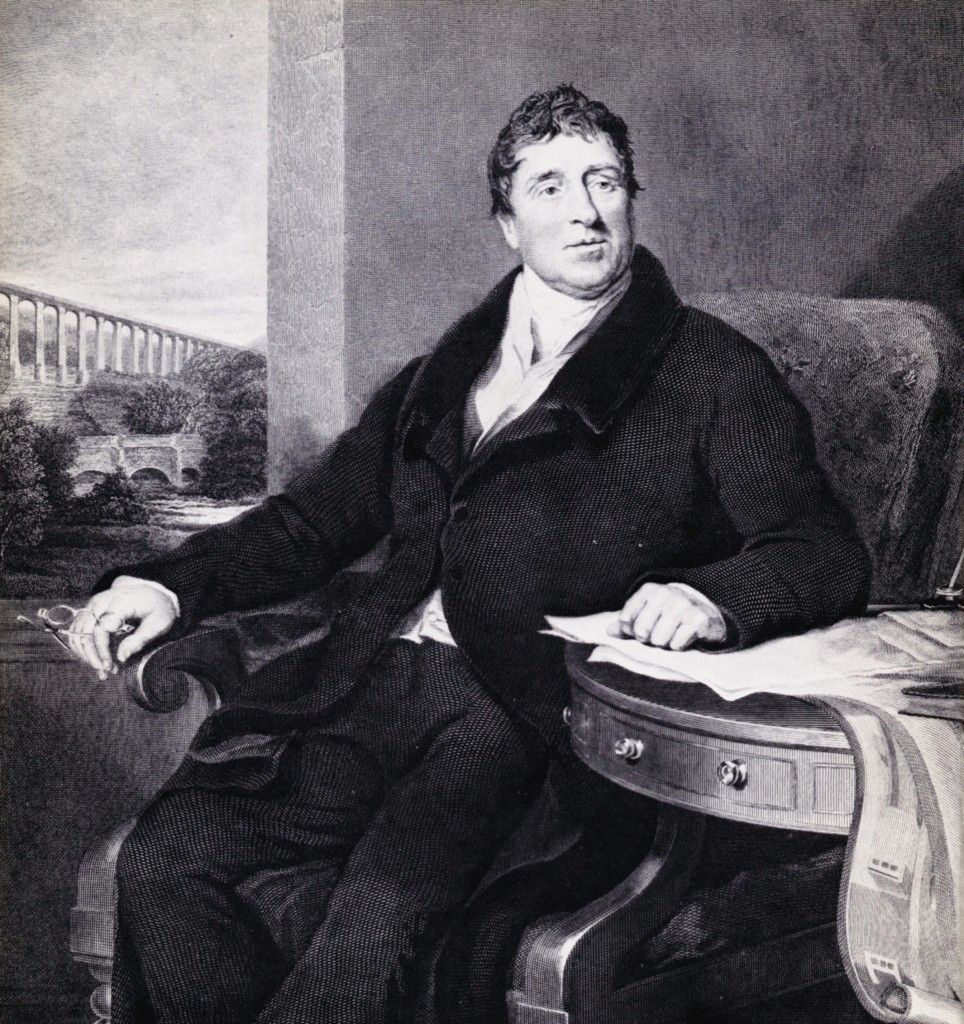
That famous portrait!

If ever there was a boy made good in the world who did great things for North Wales, the Scottish designer and engineering genius Thomas Telford has to rate amongst the finest. Born into poverty to a lowly Shepherd John and his wife Janet in August 1757 in the tiny hamlet of Glendinning, Westerkirk in Dumfries, his father had one of the toughest lives imaginable.

It took its toll and he died in his early 40s only 3 months after Thomas was born, leaving his mother Janet (nee Jackson – yes really!) homeless since they lost their tiny cottage which went with her husband’s job.  They moved into one room in her brother’s house not far away.  Thomas’ brother died in infancy leaving Thomas the only child and he was apprenticed to a stonemason in his teens but after being treated badly, ran back home.  He was then found another apprenticeship and this proved his making, as he had access to a wealthy local lady’s library so he became an avid reader.

Years later he moved to London and then to Portsmouth where he made more and more wealthy contacts and took on commissions which took him all over the country – one of which was for Sir William Pultney, building a new prison in Shrewsbury.  His stone work was outstanding and he also had an eye for innovative design too which made him unique as an engineer.

His work for Pultney then took him to North Wales in 1795 with a commission to build a canal and aqueduct over the river Dee.  With his trusted colleagues Matthew Davidson and right-hand man William Jessop it took 10 years to build the “Stream in the Sky” 126ft high and it’s innovative design made it a World Heritage Site in 2009.  You can walk or sail a narrow boat or even canoe over the aqueduct if you have a head for heights.

In 1800 with the Act of Union with Ireland, Irish MPs needed to get to Parliament in London and it was such an horrendous journey that in 1815 the Government commissioned Telford to build a new 260 mile road from London to Holyhead in North Wales, where a Ferry sailed to Dublin.  The famous A5 which opend in 1826 still exists today and is a major feat of engineering.  It culminated with the stunningly beautiful Menai Bridge – the first bridge crossing from mainland Wales to the Isle of Anglesey.  There are now 2 bridges with the Britannia Bridge added in 1850 as a railway bridge – now a road bridge too.  Today the Menai bridge is too narrow for large vehicles but a must do if you have a car!

So roads, bridges, canals in North Wales and much more in Scotland too, this guy was seriously talented.  He died in 1834 having become very wealthy and the first President of the Institution of Civil Engineers.  His portrait hangs in their offices in London and shows our very own Pontcysyllte Aqueduct behind him. The translation of the name means “the bridge that connects” and his title of the Colossus of Roads, given to him by poet and friend Robert Southey, seems rather apt!

Posted on

Our Sleeping Hero

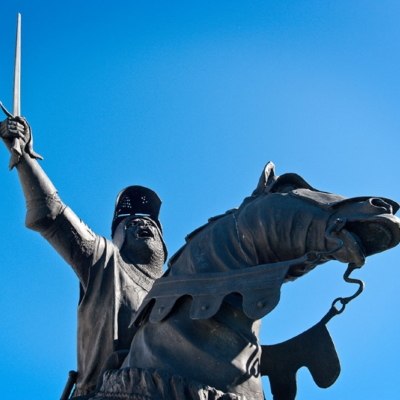
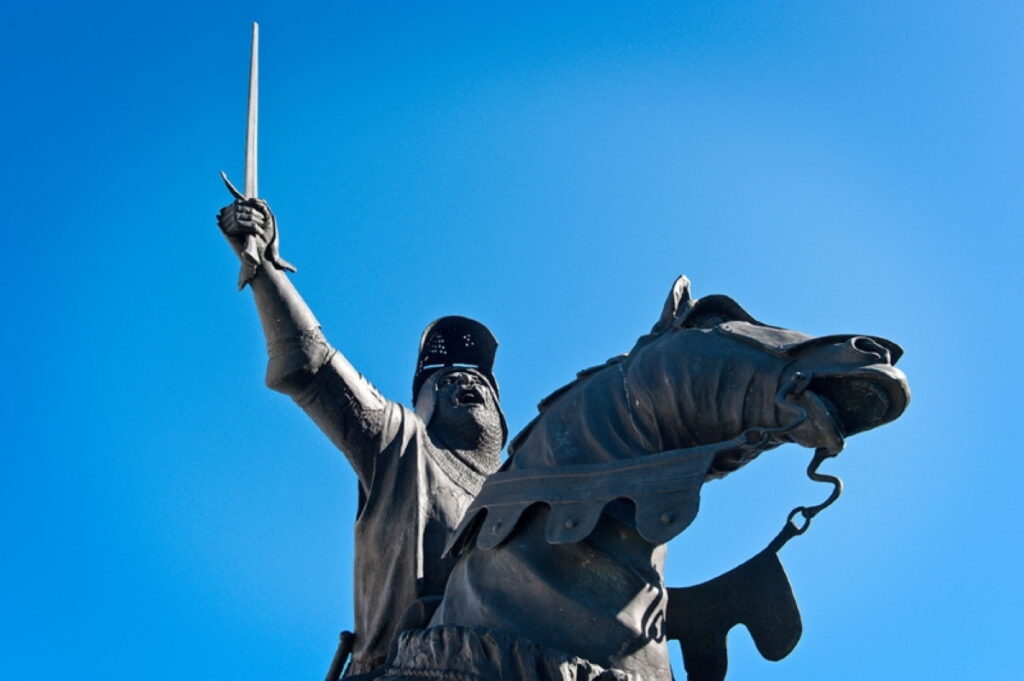
The image above is a tribute statue to Owain in Corwen on the main A5 in North East Wales.

Everyone has heard of Braveheart thanks to a certain film by Mel Gibson portraying the Scottish hero William Wallace, but few outside of Wales (unless you have studied Henry IV part one by William Shakespeare) have heard of our hero Owain Glyndŵr.  It’s therefore one of our tasks as Tourist Guides for Wales and in particular those of us based in North Wales to tell his story.

Most of Owain’s story is undocumented as most of his papers were destroyed by Prince Hal or Henry V (of Agincourt fame) when he burnt down Owain’s home at Sycharth on the Welsh/English border with Shropshire.  Keeping this to the short version, he was born around 1357 of royal heritage – and we mean the true Princes of Wales not those descended from William the Conqueror.  He was an Uchelwr (Welsh for Gentleman) and led a comfortable life, even fighting for the English King Henry IV against the Scots in his earlier years and also studied law.  He married a lawyer’s daughter -Margaret Hanmer and they had around 10 children (not one knows the exact number) and lived a comfortable life.  But then it all went awry following a land dispute with a neighbour Earl Reginald de Grey.  He took his dispute to the English Parliament who sent him packing.  He was so insensed by this and their arrogance that he and his sons had had enough.  After all he was a seasoned warrier and on 16 Sept 1400 he declared war on the English King and declared himself Prince of Wales.

Within a week he had burned and taken 7 key towns in the English Marches (the land between England and Wales controlled by the Marcher Lords) and had secured support from the other Welsh Princes and their supporters across Wales.  He took Harlech and Caernarfon castles but had reckoned without the equally strong force which was Prince Hal.

After 10 years of fighting Owain’s wife and daughters were captured by the English, his sons were dead and he disappeared.  Welsh legend has it that he will rise again to protect Wales at some point in the future and is just sleeping.  No one knows what really happened to our hero, but a hero he certainly was, giving up a luxury lifestyle when in his 40s to try and win back Wales for the Welsh people and banish the English from our lands.

Posted on

President Thomas Jefferson

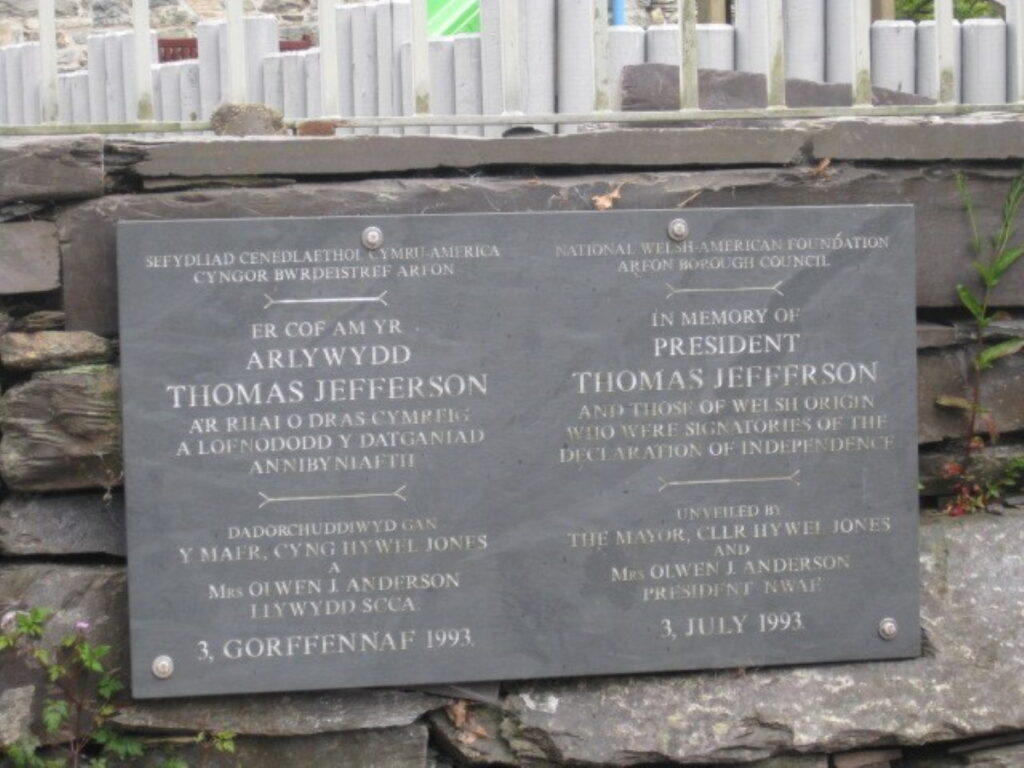
Did you know that, in addition to there being some 16 signatories of Welsh origin of the 56 delegates who signed the American Declaration of Independence, the Principal Author was one Thomas Jefferson, who went on to become the 3rd President of the United States of America.  It is said that Jefferson’s ancestry comes from Llanberis at the heart of slate mining country in North Wales and a plaque is erected in his memory at the National Slate Museum in Llanberis in honour of his Welsh roots.

Posted on

Colonel John Jones Maesygarnedd

Colonel John Jones (c. 1597-October 17, 1660), was a Welsh military leader, politician and one of the regicides of King Charles I. A brother-in-law of Oliver Cromwell, Jones was born at Llanbedr in North Wales and is often surnamed Jones Maesygarnedd after the location of his Merionethshire estate. Jones spoke Welsh with his family. He was an avid Republican at a time when most of Wales was Royalist, and for this reason he was described by one of his contemporaries as “‘the most hated man in North Wales”.

© image copyright www.britroyals.com

Jones was appointed Commissioner of the High Court of Justice in 1649, as a member of which he became one of the fifty-nine signatories to King Charles I’s death warrant. Like many of the others who signed, he was in grave danger when Charles II of England was restored to the throne. He was arrested, put on trial, and found guilty of regicide. On October 17, 1660, Jones was hanged, drawn and quartered a fate which, according to some accounts, he faced with immense bravery.

© This “Did you know?” comes from the following blog site: http://executionwales.blogspot.co.uk/2010/01/colonel-john-jones-maesygarnedd.html?showComment=1354653679781